
Keyboard vs. Controller: Which Setup Actually Controls the Meta?
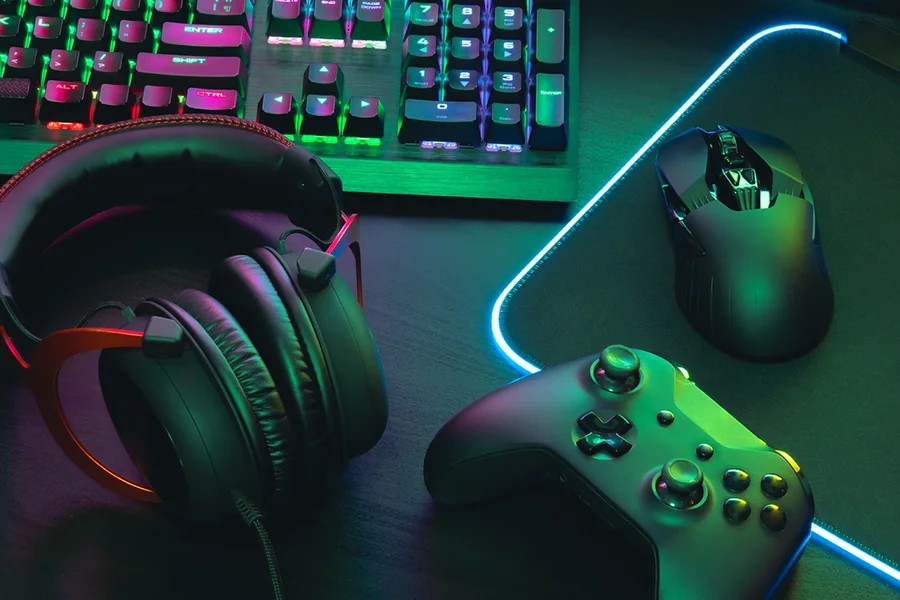
The debate between Mouse and Keyboard (M&K) and Controller input devices is as old as competitive gaming itself. Historically, the division was simple: PCs ran M&K for tactical precision, while consoles relied on gamepads for relaxed, intuitive play.
In today’s cross-platform esports landscape, however, M&K and controller users meet directly on the same virtual battlegrounds. The question of which setup truly controls the meta now depends heavily on game genre, developer balancing choices, and hardware innovations.
Mouse & Keyboard: The Kings of Absolute Precision
Mouse and keyboard setups remain the gold standard for games requiring raw spatial awareness, rapid target acquisition, and complex macro management.
Key Advantages:
- Unlimited Speed & Spatial Precision: A mouse relies on 1:1 physical translation. Flicking 180 degrees to clear a corner or tracking a target across pixels occurs as fast as your arm and wrist can move.
- Keybind Ergonomics: With over 100 keys available at your fingertips, M&K allows players to map every command, item, or utility to a dedicated key—eliminating multi-button combinations or radial menus.
- Dominance in Tactical Shooters & Strategy: Titles like Counter-Strike 2, VALORANT, and MOBAs like League of Legends are near-exclusively dominated by M&K due to the need for pixel-exact cursor placement.
Controller: The Rise of Aim Assist and Rotational Tracking
While controllers were once considered inherently inferior for first-person shooters, modern game design and competitive mechanics have drastically altered the power balance.
Key Advantages:
- Rotational Aim Assist (RAA): In fast-paced tracking shooters like Apex Legends and Call of Duty, aim assist compensates for thumbstick limitations. Rotational aim assist reacts with zero human latency to enemy movement directional shifts, granting controller players unmatched tracking consistency at close-to-medium ranges.
- 360-Degree Analog Movement: Thumbsticks provide smooth, multi-directional movement control, making subtle positioning and fluid movement techniques feel natural.
- Physical Comfort: Ergonomic grips and trigger rumble feedback reduce hand strain during long, high-stakes sessions.
Meta Breakdown by Genre
To see which input rules the modern meta, we have to look at specific competitive genres:
| Genre / Title | Dominant Input | Primary Reason |
| Tactical Shooters (CS2, VALORANT) | Mouse & Keyboard | Requires 1:1 precise crosshair placement with no aim assist available |
| Battle Royales / Arena Shooters (Call of Duty, Apex) | Controller | Heavy close-range rotational aim assist favors thumbstick tracking |
| Sports & Racing (EA FC, Rocket League, F1) | Controller | Analog triggers and 360-degree sticks allow granular throttle/steering control |
| Fighting Games (Street Fighter, Tekken) | Leverless / Controller | Precise directional inputs without the movement latency of a full keyboard |
Technological Advances Shifting the Playing Field
As competition heats up, hardware manufacturers on both sides continue to innovate to gain an edge:
- Hall Effect & Paddle Controllers: Modern pro gamepads feature rear paddles (eliminating the need to lift thumbs off the sticks to jump or reload) and magnetic Hall Effect joysticks that eliminate stick drift, turning controllers into high-precision competitive tools.
- Rapid Trigger Keyboards: Mechanical keyboards featuring magnetic Hall Effect switches allow keys to reset instantly upon rising, letting M&K players execute counter-strafing and rapid inputs faster than ever before.
- Custom Customization: From dynamic input curves to finding the right layout slot gacor on specialized macro boards, player hardware customization has never been higher.
The Verdict: Context is Everything
No single input device permanently rules the entire gaming meta. Mouse & Keyboard continues to reign supreme in games prioritizing micro-precision, flick speed, and complex keybinds. Conversely, controllers dominate title metas featuring strong built-in aim assist, tracking-heavy gunfights, or continuous analog movement.
Ultimately, the meta isn’t controlled by the peripheral alone—it is dictated by how game developers balance physical control against digital software assistance.